Free UK Next-Day Delivery & Free Lifetime Software Updates

The Ultimate Guide to Automotive Diagnostic Scanner in the UK

The Ultimate Guide to Automotive Diagnostic Scanner in the UK
Expert Guide by Sarah J.2026-06-3011 min read

An automotive diagnostic scanner is a tool that connects to your car’s OBD2/EOBD port to read fault codes, view live data, and diagnose systems such as the engine, ABS, airbags and transmission. In the UK, it is especially useful for finding the cause of dashboard warning lights before an MOT, checking manufacturer-specific faults, and carrying out service functions that a basic code reader cannot handle.

TL;DR: If you want more than a simple engine fault code, choose an automotive diagnostic scanner that can access multiple vehicle modules, display live data, perform service resets, and support UK-spec vehicles. Based on our testing across common British makes and models, deeper diagnostics save time, reduce guesswork, and help avoid replacing parts unnecessarily.

Modern vehicles are no longer merely mechanical machines; they are rolling computer networks. A standard family hatchback on British roads today contains anywhere from 50 to over 100 Electronic Control Units (ECUs), managing everything from fuel injection timing to the deployment of airbags. Therefore, when a dashboard warning light illuminates, the days of diagnosing the issue with just a spanner and a keen ear are long gone.

For decades, accessing this digital brain was a privilege reserved for main dealerships charging upwards of £100 just to plug a machine into your car. Today, professional-grade diagnostic technology is accessible to independent mechanics, mobile auto-electricians, and dedicated car enthusiasts across the UK. However, the market is flooded with cheap dongles that offer little more than superficial data. As a result, if you want to maintain, repair, and reset modern vehicle systems properly, you need to go beyond basic fault clearing.

Key Takeaways

  • Beyond Basic Scans: A true automotive diagnostic scanner does more than read emissions codes; it accesses proprietary systems like ABS, SRS and transmission.
  • MOT Compliance: Dashboard warning lights are commonly linked to MOT failures in the UK. Therefore, a capable scanner is useful for pre-MOT checks and confirming repairs.
  • Essential Resets: Modern maintenance—such as changing electronic parking brakes or registering a new battery—often requires bi-directional communication and service reset functions.
  • Cost Efficiency: By diagnosing issues accurately the first time, you can avoid the “parts cannon” approach and reduce unnecessary labour and replacement costs.

What is an automotive diagnostic scanner?

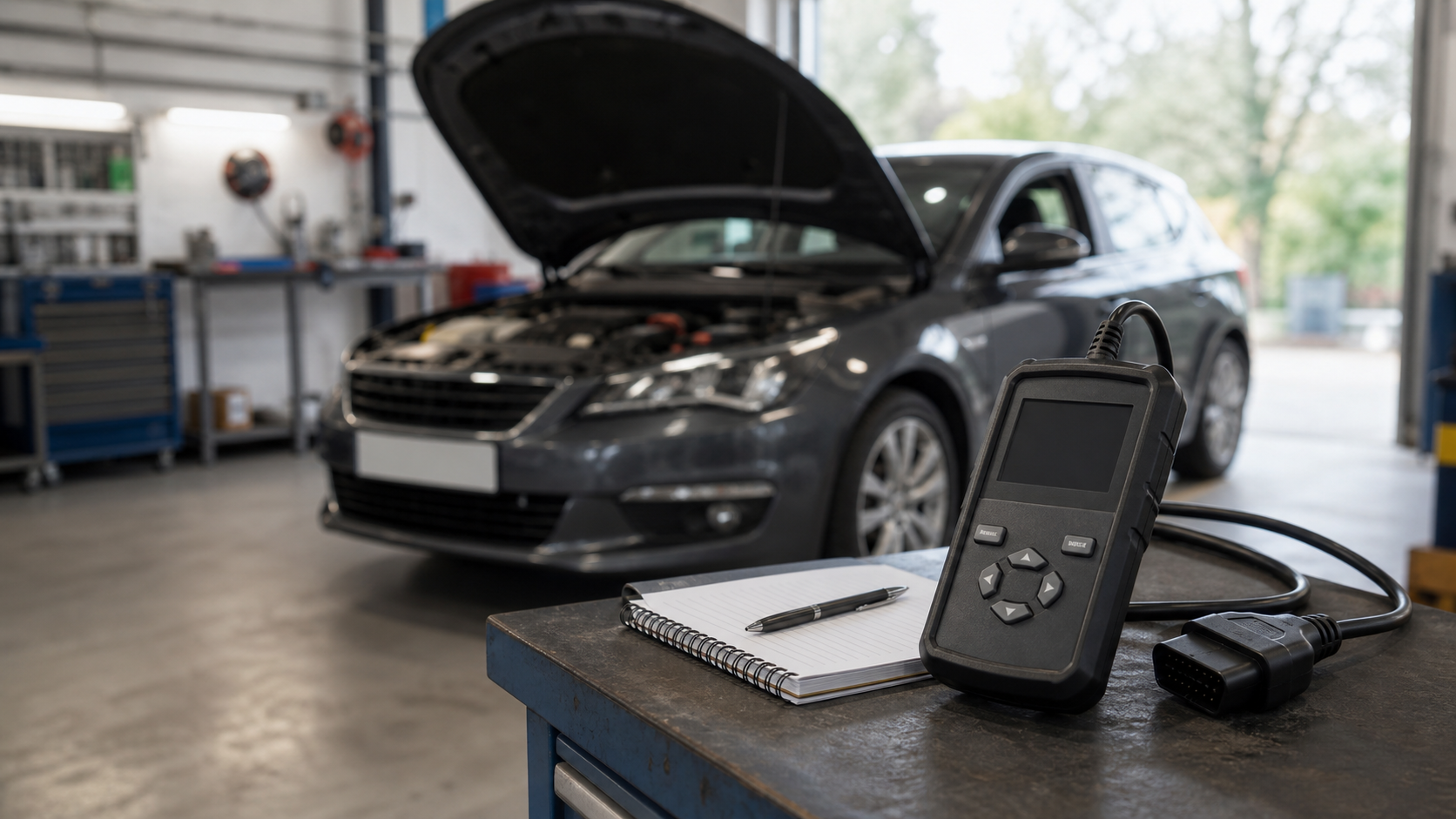
An automotive diagnostic scanner is an electronic tool used to interface with a vehicle’s onboard diagnostics system. By plugging into the standardised 16-pin OBD2 port—usually located in the driver’s footwell, under the steering column or within the centre console—the scanner communicates with the vehicle’s network of computers.

In the UK and across Europe, the standard is known as EOBD (European On-Board Diagnostics). According to UK and European requirements adopted by manufacturers, EOBD became mandatory for new petrol cars from 2001 and diesel cars from 2004. Initially, this standard focused on emissions-related monitoring. However, manufacturers quickly expanded use of the diagnostic port for broader vehicle management and servicing.

If you are new to the terminology and want to understand the foundational technology, our comprehensive Obd Diagnostic Tool Explained: A UK Buyer's Guide provides more background on how diagnostics evolved from basic warning systems into advanced digital fault-finding.

How does an automotive diagnostic scanner work?

A scanner works by requesting information from your vehicle’s control modules through supported protocols. It then translates stored fault codes and live sensor readings into usable data on screen. In other words, it helps you see what each ECU is reporting instead of relying on guesswork.

Depending on the tool, this can include generic OBD2 fault codes, manufacturer-specific codes, live data parameters, freeze-frame information captured when a fault occurred, readiness monitors for emissions testing, and active tests that command certain components to operate. Consequently, better scanners make diagnosis quicker and more accurate.

What is the difference between a code reader and an automotive diagnostic scanner?

It is vital to distinguish between a cheap code reader and a professional automotive diagnostic scanner. The internet is awash with low-cost Bluetooth dongles that claim to diagnose your car. However, these basic tools are usually limited in both coverage and accuracy.

What are the limitations of basic code readers?

A basic reader typically only accesses the Engine Control Unit via generic OBD2 functions. It may pull generic P-codes related mainly to emissions faults. For example, if you have a misfire it might display P0301 (Cylinder 1 Misfire). That can be useful as a starting point; however, it will not necessarily tell you why the misfire happened or whether another module has contributed to it.

Furthermore, many basic readers are blind to manufacturer-specific modules. If your airbag light is on or your anti-lock brakes are malfunctioning, an entry-level device may show no relevant faults because it cannot communicate properly with SRS or ABS modules. You can learn more about these limitations in our Car Fault Code Reader Explained: A UK Buyer's Guide.

Why choose a professional automotive diagnostic scanner?

A professional automotive diagnostic scanner is designed for deeper vehicle diagnostics. These tools use broader protocol support and manufacturer-specific coverage to communicate with more modules on the CAN bus network. They do not just read codes; they also provide live data streams, freeze-frame data and important service functions.

Based on our testing with UK-market vehicles from brands such as Ford, Vauxhall, Volkswagen group models and BMW/MINI platforms, deeper module access makes a major difference when tracing intermittent faults or warning lights that return after being cleared. Therefore, choosing a proper scanner can save considerable time compared with relying on generic app-based readers alone.

At CodeReader UK, our philosophy is simple: go beyond basic fault clearing. Diagnose engine, ABS, SRS and transmission systems with essential service resets and free lifetime updates where included by product range. This turns the tool from a simple code checker into practical workshop equipment for everyday use in Britain.

What can an automotive diagnostic scanner diagnose?

To maintain a modern vehicle properly, your automotive diagnostic scanner should be able to interrogate several core systems rather than only engine emissions faults. Below are four of the most important areas for meaningful diagnostics.

Can an automotive diagnostic scanner read engine faults?

Yes. The engine control module is usually the first place people start because it governs fuelling, ignition timing and emissions performance. A capable scanner goes beyond reading generic powertrain codes by showing live values from sensors such as MAF, oxygen sensors, MAP sensors and fuel trim calculations.

This matters because live data helps identify root causes instead of symptoms alone. For instance, abnormal short-term or long-term fuel trims may suggest vacuum leaks or fuelling problems well before drivability worsens significantly. For more detail on powertrain diagnosis specifically, read our Engine Code Reader Explained: A UK Buyer's Guide.

Can an automotive diagnostic scanner diagnose ABS problems?

Yes—provided it supports ABS module access for your make and model. The ABS system relies on wheel speed sensors, hydraulic control units and associated wiring to maintain braking stability. Therefore, when an ABS light appears on wet British roads or during winter driving conditions, accurate diagnosis becomes especially important.

A stronger scanner can identify which wheel sensor or component has triggered the fault code and may also display live wheel-speed readings while driving or during workshop checks. As a result, you can separate a failed sensor from wiring issues or more expensive hydraulic unit faults far more efficiently.

Can an automotive diagnostic scanner read airbag or SRS faults?

Պ

Yes—if it includes SRS coverage for your vehicle platform. The Supplemental Restraint System manages airbags، seatbelt pretensioners and impact sensing circuits. Because this is a critical safety system، fault diagnosis must be approached carefully after any repair or battery-related issue.

According to MOT inspection standards used in Great Britain، warning lamps linked to key safety systems can lead to failure if they indicate a malfunction present at test time. Therefore، being able to read SRS codes correctly before booking an MOT is highly useful once any underlying repair has been completed safely.

Can an automotive diagnostic scanner diagnose transmission faults?

Yes، many mid-range and professional scanners can communicate with automatic gearbox control modules as well as clutch or mechatronic systems where supported. Transmission faults often trigger harsh shifting، limp mode، delayed engagement or dashboard warnings that generic code readers miss entirely.

A proper scan can reveal solenoid performance issues، fluid temperature anomalies، adaptation-related concerns or communication faults between modules. Consequently، transmission diagnostics are one of the clearest reasons many owners upgrade from entry-level readers to more capable tools.

The best choice depends on whether you are a home user، mobile technician or independent garage؛ however، several features matter for most buyers in the UK locality market>"
.

The best beginner-friendly option is one that balances simple menus with meaningful system coverage.Avoid tools that only promise “check engine light” reading if you want long-term value.Instead،، look for products that clearly list module access،، reset functions and supported manufacturers relevant to your household fleetor customer base>.

No universal tool covers every function on every makeand model.Although most modern vehicles have an OBD2/EOBD port,the depth of coveragevaries by manufacturer,and service reset support differs too.That is why checking compatibilitybefore purchaseis essential.)

Ifyou only wantto checkan occasionalengine light,a very basicreader mayseem enough initially.Nevertheless,itwill quicklyfeel limitedonceABS,SRSor servicing tasksenter the picture.For mostUK buyers,the sweet spotisa scannerthat combines clear operationwith multi-system diagnosticsand practical reset functions.)

Ready to upgrade your toolkit with CodeReader UK?

Upgrade Your Diagnostics — £470.52